

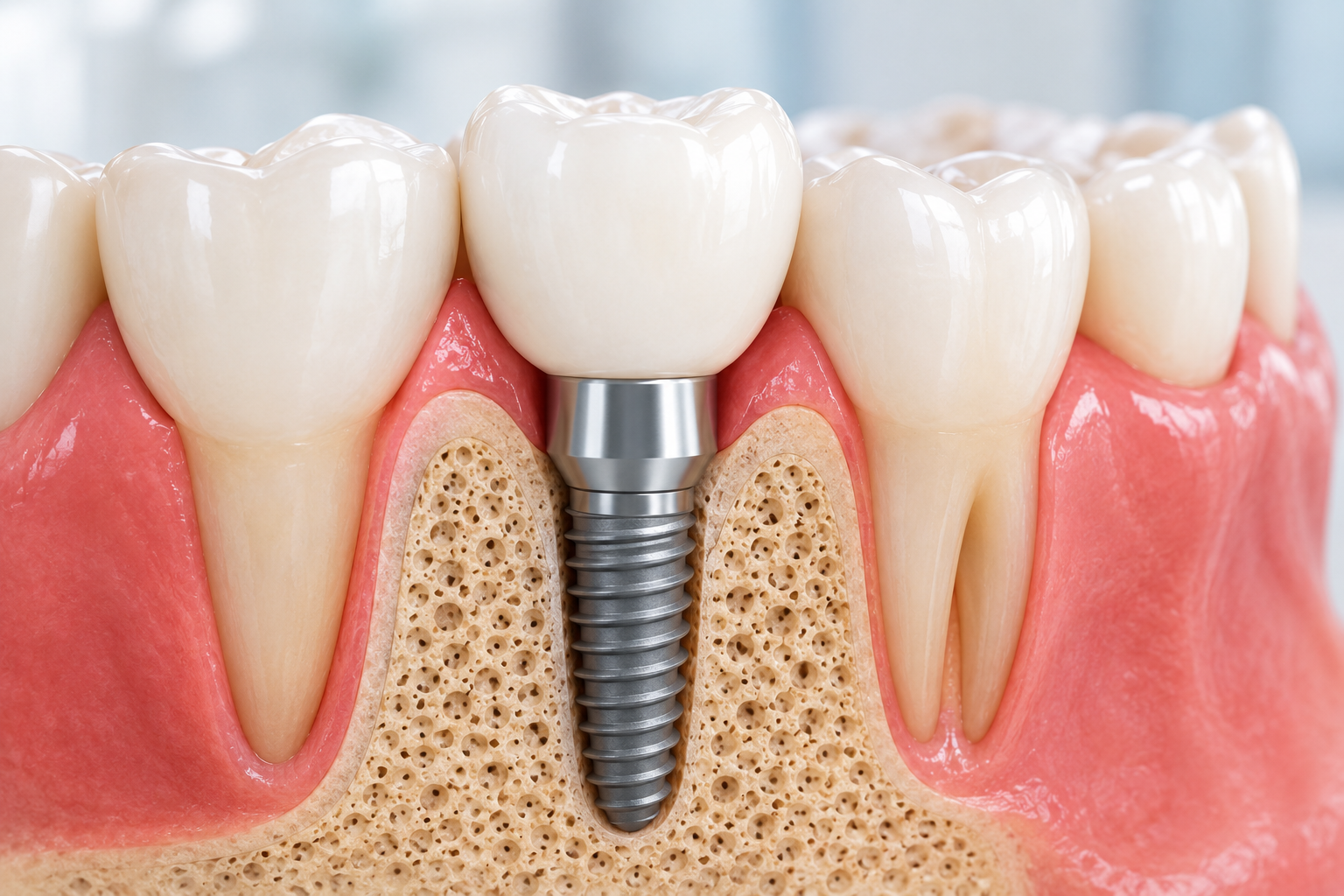
Missing teeth can affect more than your smile. They may make eating, speaking and maintaining confidence more difficult, particularly when several teeth are affected. Dental implants offer a long-term tooth replacement option by using an implant placed into the jawbone to support a crown, bridge or denture. Understanding how implants work can help you decide whether they may be suitable for you.
A dental implant is a small titanium post that is surgically placed into the jawbone to replace the root of a missing tooth. Once the implant has integrated with the bone, it can support a replacement tooth such as a crown. Implants can also be used to support bridges or dentures when several teeth are missing.
Dental implants are designed to provide stable support for replacement teeth. Unlike conventional removable dentures, implants are anchored within the jaw, helping replacement teeth feel more secure during everyday activities. They can also replace missing teeth without requiring neighbouring healthy teeth to be prepared for support, depending on the treatment plan.
Some of the potential benefits of dental implants include:
Dental implants are not automatically suitable for everyone with missing teeth. Your dentist will consider your oral health, gum condition, remaining teeth, jawbone volume and general health before recommending treatment. Good oral hygiene and healthy gums are important because problems such as active gum disease can affect the long-term health of an implant.
Smoking can also affect implant treatment and healing, while teeth grinding may place additional pressure on implants. Your dentist will assess these factors during your consultation and explain whether additional treatment or lifestyle changes may be recommended before implant placement.
Your treatment usually begins with a detailed assessment of your teeth, gums and overall oral health. Your dentist may take dental X-rays and, where appropriate, a three-dimensional scan to assess the available bone and important surrounding structures. Impressions or digital scans may also be used to plan the position and appearance of your replacement tooth.
Your dentist will also discuss your treatment goals, available options, expected timescales and potential risks. This consultation is an important opportunity to ask questions and understand exactly what your proposed implant treatment involves before deciding whether to proceed.
Dental implant treatment normally involves several stages rather than being completed in a single appointment. The implant is placed into the jawbone during the surgical stage and then allowed time to heal. Once the implant has bonded with the surrounding bone, the replacement crown, bridge or denture can be attached.
Your dentist first examines your mouth and assesses whether an implant is appropriate. This may involve X-rays, scans and digital impressions. Any existing problems, such as tooth decay or gum disease, may need to be addressed before implant treatment begins.
During implant placement, the dentist creates a carefully planned space in the jawbone and inserts the implant. The procedure is generally performed under local anaesthetic, meaning the treatment area is numbed while you remain awake. The gum is then positioned around the implant and allowed to heal.
After placement, the implant needs time to integrate with the jawbone. This process is known as osseointegration and can take several months, depending on individual circumstances. The gum may heal sooner, but the underlying bone requires additional time before the implant can support the final restoration.
Once the implant has healed sufficiently, your dentist can begin the restorative stage. Impressions or digital scans may be taken to create a replacement tooth that fits comfortably and complements your existing teeth. Depending on your needs, the implant may support a single crown, a bridge or an implant-retained denture.
Some people may not have enough healthy jawbone to support an implant in the planned position. This can happen following long-term tooth loss because the bone around a missing tooth can gradually reduce. If additional bone is required, a bone grafting procedure may be recommended before or alongside implant placement.
Whether you need bone grafting depends on the amount and quality of bone available, as well as the position of the proposed implant. Additional grafting can extend the overall treatment time, so your dentist should explain the procedure, expected healing period and alternatives during your consultation.
The overall treatment time varies considerably between patients. Straightforward cases may require several months, largely because the implant needs time to integrate with the jawbone before the final restoration is fitted. Additional procedures, such as tooth extraction or bone grafting, can make the process longer.
Your dentist should provide an individual treatment plan rather than promising a fixed timescale. The condition of your gums, available bone, number of implants and your body’s healing response can all influence how long your treatment takes from the initial consultation to the final restoration.
Dental implant placement is usually performed under local anaesthetic, so the treatment area should be numb during the procedure. Some discomfort, swelling or bruising can occur after surgery, particularly during the first few days. Your dental team will provide aftercare instructions and advise you about suitable pain relief where appropriate.
As with any surgical procedure, dental implant treatment carries potential risks. Although complications are not expected in every patient, your dentist should explain them before treatment. Possible problems include infection, bleeding, nerve-related symptoms, implant failure and inflammation or bone loss around an implant.
Factors such as smoking, poor oral hygiene, gum disease and excessive pressure from teeth grinding can affect implant outcomes. Following your dentist’s instructions and maintaining regular professional care can help support the long-term health of your implants.
Dental implants still require daily care even though they are not natural teeth. Plaque and bacteria can accumulate around the implant and surrounding gum tissue, potentially causing inflammation and damage if cleaning is neglected. Your dentist or hygienist can demonstrate the most suitable brushing and interdental cleaning techniques for your individual restoration.
Good long-term implant care includes:
Dental implants can provide a long-term solution when they are properly planned, placed and maintained. Their longevity depends on several factors, including oral hygiene, gum health, lifestyle habits, the condition of the supporting bone and regular professional monitoring. The replacement crown, bridge or denture may experience wear over time and could eventually require repair or replacement.
Dental implants are not the only way to replace missing teeth. Depending on your oral health and preferences, your dentist may discuss alternatives such as conventional bridges or removable dentures. Implants can offer a fixed option and may avoid preparing neighbouring teeth, while dentures can provide a removable solution without implant surgery.
The best choice depends on your individual circumstances. A dental professional can compare the advantages, limitations, costs and treatment requirements of each option, helping you make an informed decision based on your oral health and long-term goals.
Dental implants may be worth considering if you have one or more missing teeth and want a stable, long-term replacement option. However, suitability needs to be assessed individually. Healthy gums, sufficient bone and a commitment to maintaining excellent oral hygiene are important considerations when planning implant treatment.
If you are considering dental implants, a consultation is the best way to understand your options. Your dentist can assess your mouth, discuss your expectations and explain whether implants, dentures, bridges or another treatment would provide the most suitable solution.
If you are looking for dental implants in London, V Dental Smile provides dental implant services from its clinic in Hackney Wick. The team can assess your individual dental needs and discuss suitable options for replacing missing teeth with a treatment plan tailored to your circumstances.
Choosing dental implant treatment is an important decision, so professional assessment and careful planning are essential. Whether you have lost a single tooth or several teeth, V Dental Smile can help you explore your options and understand the steps involved. Visit the clinic’s website to learn more about dental implants and arrange a consultation in Hackney Wick, London.