

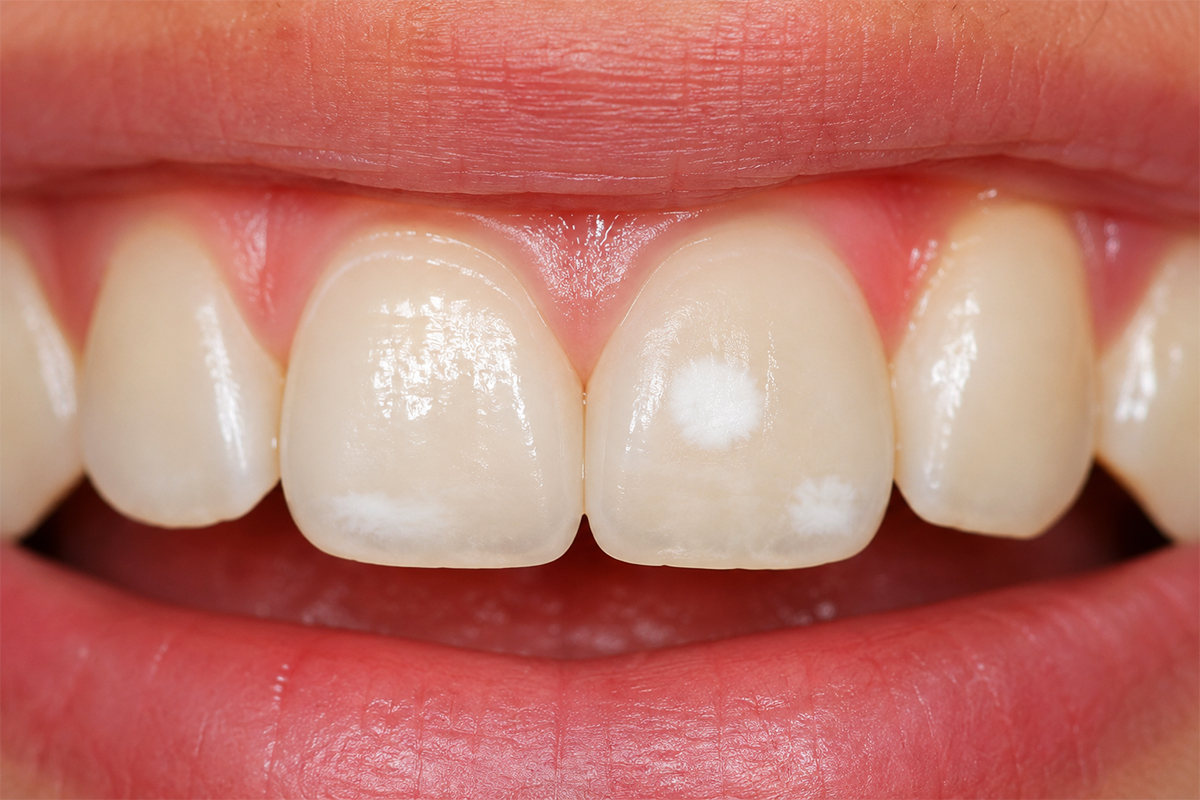
White spots on teeth can be easy to notice, particularly when they appear on the front teeth. Although they may sometimes be harmless changes in enamel, they can also indicate mineral loss or early tooth decay. Understanding why these marks develop can help you choose the right treatment and protect your teeth from further damage.
White spots are areas of the enamel that look lighter, chalkier, or more opaque than the surrounding tooth surface. They can develop when minerals are lost from the enamel or when the enamel does not form normally. Because several conditions can cause similar-looking white spots, a dentist should assess persistent or newly developed marks.
There is no single cause of white spots. Their appearance, location and when they first developed can provide useful clues. Common causes include:
The appropriate treatment depends on identifying the underlying cause rather than simply treating the appearance of the spots.
Demineralisation occurs when acids produced by plaque bacteria gradually remove minerals from the enamel. White spots can be an early sign of this process and may indicate that the tooth is becoming more vulnerable to decay. Frequent sugary foods and drinks, poor plaque control and regular acid exposure can increase the risk.
If you notice new chalky white areas, particularly around braces or close to the gum line, it is worth arranging a dental examination. Identifying enamel changes early can help prevent further mineral loss and reduce the likelihood of developing a cavity.
Dental fluorosis can occur when developing teeth are exposed to excessive amounts of fluoride during childhood. It may cause white flecks, patches or, in more pronounced cases, changes to the enamel surface. Mild fluorosis is generally a cosmetic concern rather than an active dental disease.
Because fluorosis develops while teeth are forming, adults generally do not develop new fluorosis spots. If you notice white marks appearing for the first time, a dentist can help determine whether fluorosis or another enamel condition is responsible.
Enamel hypoplasia occurs when the enamel does not develop properly, leaving areas that may appear white, yellow or brown. It can affect the thickness and quality of enamel and may make the affected areas more susceptible to sensitivity or decay.
The condition usually develops while teeth are forming. Depending on its severity, your dentist may recommend monitoring the affected tooth or considering restorative or cosmetic treatment.
People who wear braces can sometimes develop white spots around the areas where brackets were attached. Braces themselves do not directly cause these marks. Instead, plaque and acids can accumulate around brackets, making it harder to clean certain areas effectively and increasing the risk of enamel demineralisation.
Maintaining careful oral hygiene throughout orthodontic treatment is therefore important. Regular brushing, cleaning between the teeth and following your dentist or orthodontist’s advice can help reduce the risk of developing these marks.
Sometimes they can be. White spots caused by enamel demineralisation may represent an early stage of tooth decay, before a visible cavity develops. However, not every white spot means that you have a cavity. Fluorosis and developmental enamel changes can also create similar marks.
For this reason, it is better not to diagnose the cause yourself. A dentist can examine the tooth and determine whether the area requires treatment, monitoring or cosmetic management.
Treatment depends on why the spots developed and whether the enamel has suffered active damage. Your dentist may recommend:
Not every white spot needs treatment. Some developmental changes may simply be monitored if they do not affect the health or function of the tooth.
Teeth whitening does not necessarily remove the underlying cause of white spots. In some cases, whitening may make existing colour differences more noticeable temporarily. If you are considering whitening because of uneven tooth colour, speak to a dentist first so they can identify the reason for the discolouration and recommend an appropriate option.
Good daily oral care can help prevent white spots associated with plaque, mineral loss and tooth decay. A few simple habits can make a significant difference:
These habits help protect enamel and reduce the factors that contribute to demineralisation and tooth decay.
You should arrange a dental examination if you notice new, spreading or changing white spots, particularly if they are accompanied by sensitivity, pain or visible damage. Early assessment can help identify whether the marks are cosmetic or linked to enamel mineral loss and decay.
A professional examination is particularly important when white spots develop suddenly or when you are unsure why they have appeared. Treating the underlying problem early can help protect the affected tooth and prevent more extensive treatment later.
If you are concerned about white spots on your teeth, V Dental Smile can help you understand what may be causing them and whether treatment is necessary. Based in Hackney Wick, London, the dental clinic provides professional dental care tailored to individual oral health needs.
Whether your concern is enamel discolouration, early tooth decay, cosmetic changes or another dental issue, an appropriate assessment is the first step towards finding the right solution. Visit V Dental Smile to learn more about the clinic and its dental services in Hackney Wick, London.